St Anthony's Primary School - Picton
Picton, NSW 2571
School Type
Catholic
Gender
Coeducational
Tuition Fees
N/A
Levels
KinderPrimary
Contact Information
Overview
1. Overview
St Anthony's Primary School, Picton is a Catholic primary school that focuses on faith-based education within a close-knit community. It operates as a small-to-medium sized school with a welcoming environment that values each child’s growth across academics, faith, and character.
Class sizes are typically in the 20s, fostering approachable teacher support and opportunities for students to participate in class discussions. The atmosphere is designed to be nurturing, inclusive and student-centered, with emphasis on building personal responsibility, respect and community connections through faith-informed learning.
⸻
2. Academics & Learning
- Academic strengths: Strong foundations in English and numeracy, with an emphasis on literacy development and meaningful numeracy growth. Christian studies and faith-based integration support holistic learning, with opportunities to connect classroom concepts to real-life values.
- Special programs: Religious education is a central component, often complemented by student leadership activities and opportunities for enrichment where available. Extension options may be offered in line with school capacity and student need.
- NAPLAN / trends: NSW Catholic primary schools typically show steady progress across reading, writing and numeracy over successive years, with a focus on targeted improvement and inclusive teaching practices.
- Student-teacher ratios: Class sizes around 20–25 students with a teaching team that supports individual and group learning. Student-teacher ratios reflect a personalised approach within a small-to-medium school context.
- Support for diverse learners: Inclusive education approach with coordination for students needing additional support, including potential EAL (English as an Additional Language) assistance and SEN (Special Education Needs) support where applicable.
⸻
3. Sports & Extracurricular Strengths
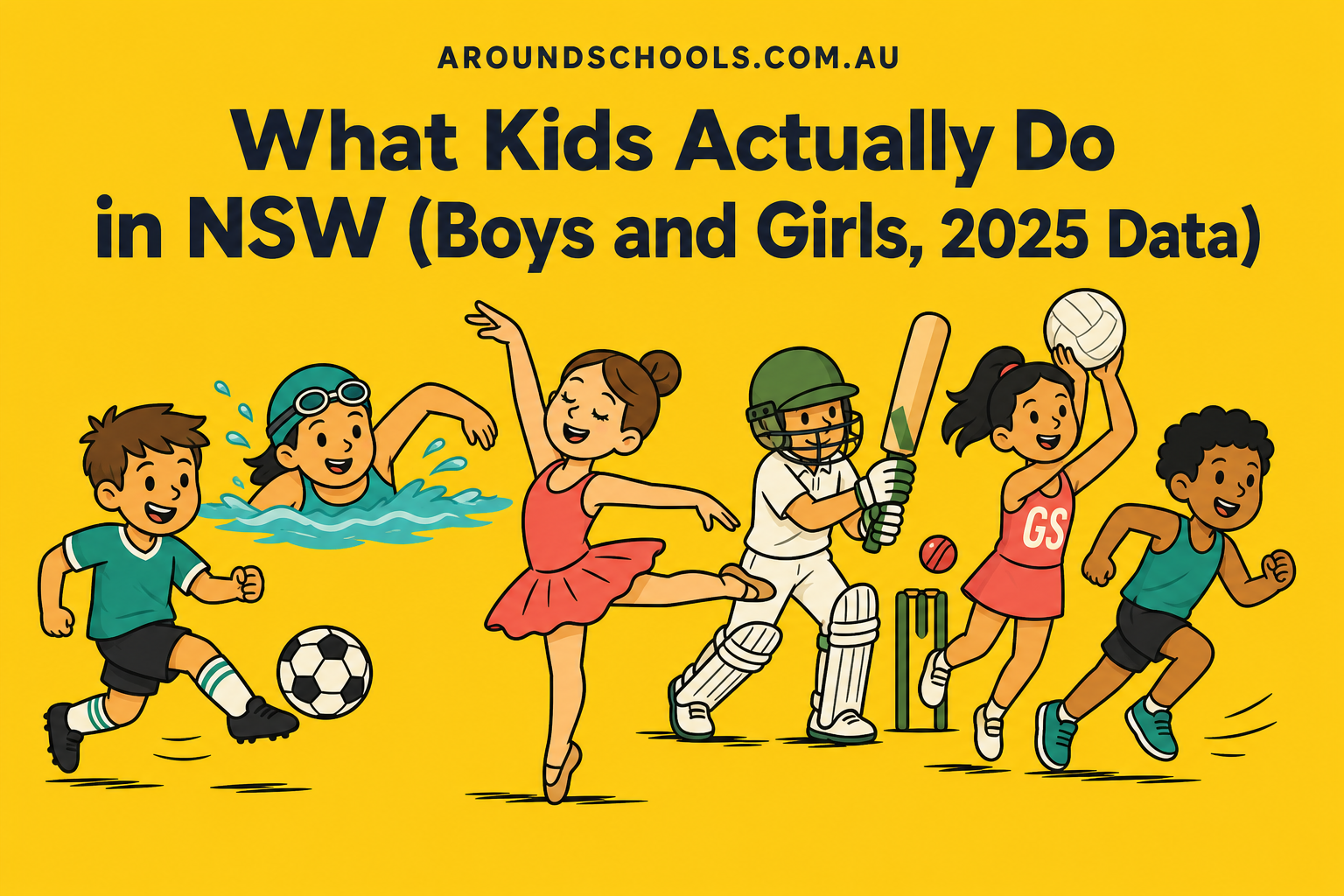
- Sports offered: Common primary offerings such as soccer, netball, rugby league, cricket and athletics, with participation in inter-school and local competitions where possible.
- Strong teams or achievements: The school participates in district-level competitions and showcases commitment to inter-school sport, teamwork and sportsmanship.
- Music, arts, drama programs: Opportunities in music and performing arts through school ensembles, choir or drama activities and school concerts.
- Clubs: Robotics, coding, chess and debating may be available, with other clubs offered based on staffing and student interest.
- Partnerships: Involvement with local community groups and diocese activities; opportunities to participate in local competitions and events through school networks.
⸻
4. Wellbeing & Pastoral Care
- Anti-bullying approach: Clear anti-bullying policies and supportive programs aimed at creating a safe, respectful school environment; emphasis on restorative practices.
- House system: A house-based framework to promote positive belonging, teamwork and healthy competition across events and activities.
- Counsellors / wellbeing officers: Access to wellbeing support within the school, with connections to external services as needed to support student health and resilience.
- Transition support for new students: Orientation activities, buddy systems and targeted transition support to help new students settle in smoothly.
⸻
5. Facilities
- Sports grounds: Maintained playing fields or courts suitable for school sport and physical education.
- Libraries: A library and reading spaces to promote literacy and independent learning.
- Science labs: Basic science facilities to support hands-on investigation and inquiry.
- Music/performing arts centers: Dedicated spaces for music, drama and performance activities.
- Tech/innovation labs: ICT resources and digital learning tools to support computing and technology education.
- Cafeteria: On-site canteen or lunch program options.
- Updated playgrounds: Modern and safe play areas for daily recreation and exploration.
⸻
6. School Values & Community Culture
- School values / mission: Catholic values such as faith, respect, responsibility, compassion and service underpin daily learning and community life.
- Leadership style: Student leadership opportunities and a collaborative culture that seeks student voice and participation in decision-making where appropriate.
- Behaviour expectations: Clear behavioural standards with a consistent approach, often guided by restorative practices and positive reinforcement.
- Community reputation: Strong parish connections and a supportive parent and local community network that contributes to school events and volunteer activities.
- Diversity & inclusion: Welcomes families from diverse backgrounds and aims to provide an inclusive environment where all students can participate and belong.
⸻
7. School Logistics & Daily Operations
- School hours: The school day typically runs within standard primary school hours; timing may vary slightly by year or term, so check with the school for current times.
- Before/after school care: After-school care and possibly before-school options are commonly available to accommodate families’ needs.
- Uniform requirements: Uniforms are usually required with seasonal variations; details on appropriate attire and purchase locations are provided by the school.
- Transport (train/bus routes): Transport options typically include school bus arrangements or access to public transport routes; families should confirm local routes and any school-organised transport.
- Canteen availability: An on-site canteen or lunch program may be available on certain days.
- Fees (low/medium/high ranges): Fee structures are commonly described as low to medium in the NSW Catholic primary context; exact fees vary by year level and family circumstances—consult the school for precise amounts.
⸻
8. Enrolment & Admissions
11. What is the enrolment process and timeline?
- To enrol, families typically submit an application form by the school’s stated deadline, provide required documentation (birth certificate, immunisation records, proof of address or parish information as requested), and attend any information session or interview arranged by the school. A place is offered if there is capacity; space limitations may apply during peak intake periods. Once offered, families complete acceptance steps and confirm start date.
12. Is there a waiting list, and how does it work?
- Waiting lists are common when enrolment capacity is reached. Applications may be held on a waiting list and offered a place as spaces become available, with priority often given based on the school’s enrolment policy (which may include parish or feeder school considerations).
13. Are there any entry requirements, tests, or interviews?
- Primary school entry usually involves an enrolment form and family information, with an information session or interview. Standardised entrance tests are not typically part of the process for primary-aged entry; assessments, if any, focus on readiness and alignment with the school program.
14. Does the school accept mid-year transfers?
- Mid-year transfers are possible subject to space and placement considerations. Parents should initiate discussions early, provide necessary transcripts and records from the current school, and complete the school’s transfer process.
⸻
9. Frequently Ask Questions
- Why Parents Choose This School?
- A values-driven environment with a strong sense of community, supportive staff, smaller class sizes and a holistic approach to education that combines faith, academics and wellbeing.
- What type of student thrives at this school?
- Students who respond well to a nurturing, faith-informed, inclusive setting with opportunities to participate in sports, arts and leadership activities.
- What opportunities are available for students to extend their skills (academics, sports, arts)?
- Enrichment in literacy and numeracy, Faith-based learning, leadership opportunities, inter-school sports, music/arts programs, and clubs such as robotics, coding, chess or debating where offered.
- How does the school communicate with parents?
- Regular newsletters, emails, school app or portal updates, formal parent meetings and calendar events; consistent channels for timely information about student progress and school news.
- What is the school’s approach to teaching and learning?
- Student-centered learning that integrates faith values, with differentiated instruction, collaborative activities, and opportunities for hands-on exploration and inquiry.
- How does the school support students who need extra academic help?
- Targeted interventions, SEN support and potential EAL assistance, with a focus on early identification and coordinated planning.
- What support is available for academic challenges?
- Access to classroom differentiation, tutoring/extension where available, and coordination with families to implement Individual Learning Plans or similar supports as needed.
- How does the school communicate with parents? (Repeated)
- See above: regular communications through digital platforms, newsletters and scheduled meetings.
- What are the class sizes and how much individual attention do students receive?
- Typical class sizes are around 20–25 students, with teachers able to provide targeted attention through small-group work and personalised feedback.
- What extracurricular and sports opportunities are available?
- A range of sports (soccer, netball, rugby league, cricket, athletics), music/arts programs and clubs (robotics, coding, chess, debating) as staffing and student interest allow.
- What facilities does the school offer (sports, science, arts)?
- Sports grounds, library, science labs, music/performing arts spaces, technology/resource labs, canteen and updated playgrounds.
- What is the school’s approach to technology and digital learning?
- Integration of ICT and digital literacy into learning, with access to computers or devices and age-appropriate software to support curriculum and creative work.
- What transport and accessibility options are available?
- Information on bus routes or public transport access, and school facilities designed to be accessible; confirm current arrangements with the school.
- What are the typical school fees or additional costs?
- Fees are generally described as low to medium for NSW Catholic primary schools; exact amounts vary by year and family circumstances—check the school for a current breakdown.
⸻
10. Short Pros & Cons list
Pros
- Catholic values and faith-based education in a nurturing environment
- Small-to-medium class sizes with opportunities for individual attention
- Strong sense of community and supportive pastoral care
- Broad extracurricular options in sport, arts and clubs
- Accessible facilities (library, science and tech spaces, performing arts)
Cons
- Limited capacity may mean waiting lists during peak intake periods
- Fees apply (typical of private Catholic schools) and can vary by year level
- Location may influence transport options for some families
- Specific enrichment or club offerings may vary year to year based on staffing and interest
⸻
Social Media
What's Nearby

Victoria Park
Park
Menangle St, Picton

Wollondilly Library
Library
Menangle St, Picton

Picton Tennis Club
Tennis
Downing St, Picton
Glenrock Reserve
Park
Antill St, Picton
Botannical Gdns
Park
Regreme Rd, Picton
Picton Botanic Gardens
Park
Regreme Rd, Picton

Wollondilly Community Leisure Centre
Swimming
Argyle St, Picton
Picton Swimming Pool
Swimming
Argyle St, Picton
Red Bank Reserve Park
Park
Argyle St, Picton
Upcoming Events Nearby
Nearby Schools
🏫
Picton Public School
Lumsdaine St, Picton NSW 2571
Government
Coeducational
Kinder+

Picton High School
480 Argyle St, Picton NSW 2571
Government
Coeducational
Secondary
🏫
Thirlmere Public School
Oaks Rd, Thirlmere NSW 2572
Government
Coeducational
Kinder+
🏫
Tahmoor Public School
Bronzewing St, Tahmoor NSW 2573
Government
Coeducational
Kinder+
🏫
Wilton Public School
11 Greenbridge Dr, Wilton NSW 2571, Australia
Government
Coeducational
Primary
🏫
Douglas Park Public School
111 Camden Rd, Douglas Park NSW 2569
Government
Coeducational
Kinder+