A school readiness checklist should help you practise everyday routines, understand your child's strengths and plan support with their school. For families preparing for 2027, start with communication, self-care, play and familiarity with the new setting. Use the checklist below as a conversation starter, rather than a pass-or-fail assessment.
Key takeaways
- Readiness includes social, emotional and practical development alongside early learning.
- Our checklist groups 12 practice ideas into 4 areas. These are editorial categories, not an official assessment.
- Try the lunchbox, school bag and help-seeking language your child will actually use.
- Discuss transition visits and support with the school before the first day.
- Your child's school sets its own orientation arrangements. Confirm those directly.
What does school readiness mean?
School readiness is broader than knowing letters or counting. NSW Education's Starting Kindergarten FAQs describes overall development and encourages families to discuss readiness with their early childhood educator. That makes the person who sees your child learning and playing regularly a useful starting point.
Bring an example rather than a verdict. You might say, “My child joins familiar games happily but finds a new group difficult.” Ask what the educator notices and what helps. A quiet child, an enthusiastic reader and a child who needs help with clothing can have different strengths and support needs.
The suggestions below are everyday practice ideas from AroundSchools, informed by official guidance. They aren't entry requirements, a diagnostic tool or a reason to assume a child cannot attend school. If you're deciding when your child should start, discuss their circumstances and the applicable entry rules with the school and educator.
Your school readiness checklist: 12 things to practise
For each idea, jot down what already works, what you could practise together and what to discuss with school. Don't total the ticks. The useful result is a practical next step, such as choosing an easier lunchbox catch or showing the teacher your child's preferred way to ask for help.
Everyday independence
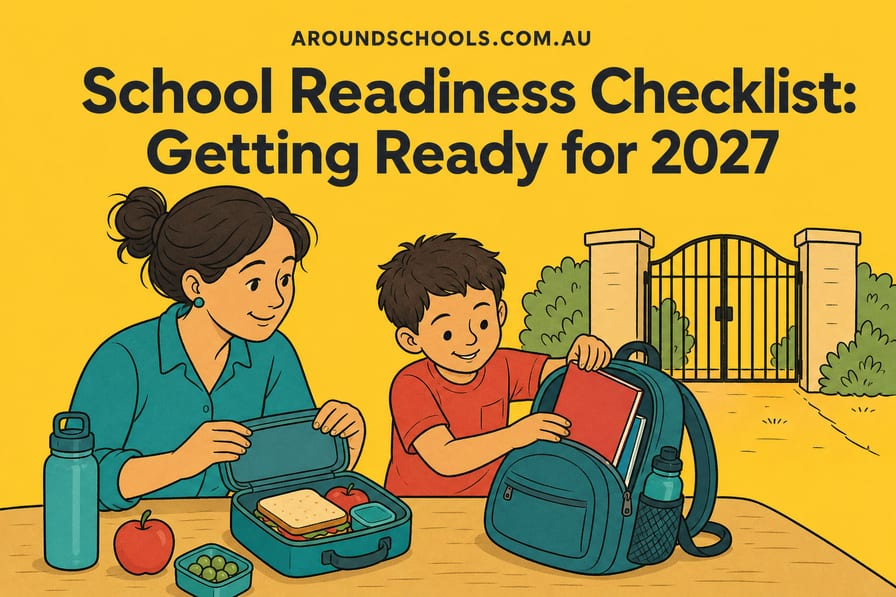
- Lunch and drinks. Offer a picnic using the actual containers you plan to pack. Notice which lids or wrappers need help. Try a different container if opening it becomes frustrating.
- Clothes and belongings. Let your child rehearse the shoes, jumper and bag they will use. Put the same items in a familiar place so packing becomes easier to repeat.
- Toileting and handwashing. Practise the routine with the support your child needs. Tell the school about assistance, accessible facilities or a change of clothes that should be planned together.
These are opportunities to build confidence with support. They aren't a demand for complete independence. The Victorian Government's starting-school tips includes everyday self-care and practical preparation among its advice for families.
Communication and asking for help
- A way to ask for help. Practise a phrase, gesture or communication aid that works for your child. A toy whose bag won't open can turn this into a gentle game.
- Sharing a need. Rehearse how your child can tell an adult they need a drink, the toilet or a break. Ask the school how it supports children who communicate differently.
- Listening during an activity. Try a familiar task such as putting a book away and collecting a hat. Notice whether a demonstration, picture or spoken prompt makes it easier.
These examples are suggestions for home practice, not a test of language ability. If your family uses several languages, share that information with school and ask what language and communication support is available. Don't treat a child's confidence in English as a complete picture of their abilities.
Playing and learning together
- Joining an activity. Use a familiar game to practise inviting someone to play. An adult can model the words or actions without expecting the child to approach a new group alone.
- Taking turns with support. Roll a ball, build together or share pretend-play equipment. Keep the task enjoyable and help when waiting becomes difficult.
- Explaining an idea. Invite your child to tell you about a drawing, construction or story. Follow their interest instead of turning the conversation into a quiz.
Queensland's Learning in Prep guidance describes independence, confidence, language and problem-solving alongside literacy and numeracy. Its examples include learning through play. The implication for home is useful: you can support learning through ordinary shared activities, without recreating a classroom.
Familiarity with school
- The journey and meeting place. Rehearse the route and show where collection will happen. Check the school's actual arrangements before describing them to your child.
- The people who can help. During a transition visit, ask who your child can approach and how they will find that person. Use staff names when the school has confirmed them.
- What happens after school. Explain whether a parent, another authorised adult or an outside-school-hours care service will collect them. Practise the explanation using your family's actual plan.
For enrolment tasks, use our separate starting-school countdown. This checklist focuses on daily experiences rather than another application calendar.
What should you ask during a transition visit?
Use the visit to learn how the school will support your particular child. Ask practical questions about daily routines and share what works at home or kindergarten. NSW Education explains that orientation helps children become familiar with school people and surroundings; ask your school what its visits include.
- Who will greet my child, and who can they approach for help?
- How do lunch, toilet visits and moving between activities work?
- Can we show you the communication tools or settling strategies we use?
- What visits, photos or other familiarisation can you offer?
- How should we share information from our early childhood educator?
- What is the plan if my child needs extra help at drop-off?
Take a short note with your child's strengths, interests and helpful supports. For example, “Enjoys construction; likes seeing what happens next; asks for help using a picture.” That gives staff something usable, rather than a general label such as shy or not ready.
How can you prepare at home without buying a program?
Choose an ordinary routine your family already does. A picnic can rehearse lunch; getting ready for the park can rehearse packing; drawing together can open a conversation. These are our applications of the official guidance, not a prescribed program. Keep the practice manageable and adapt it to your child's interests and needs.
A local library visit can also make books about school easy to explore together. If you choose a group activity, ask about age suitability, parent participation, accessibility and the session format before booking. Attendance at a paid readiness class isn't a requirement created by this checklist.
AroundSchools brings local activities and school planning into the same search. Our Kids' Activity Index describes directory coverage; it doesn't measure a child's readiness or the effectiveness of a program. Use the directory to find an option that suits your family, rather than treating the number of nearby classes as a development score.
If you need care around the school day, read our before-school care guide and confirm the service's arrangements. The 2027 school-return guide is a planning reference; ask your school for your child's individual first-day details.
What if your child needs additional support?
Start a conversation with the receiving school and your early childhood educator. Share what enables your child to participate, including communication, self-care, sensory or mobility supports. Ask which staff member will coordinate the transition and how information will reach the people working with your child.
Victoria's guidance for children with additional needs describes early planning, sharing information and enhanced transition arrangements. In Victoria, that can include planning adjustments and orientation visits. Families elsewhere should ask their school and education department about their local process. Having support needs doesn't make the checklist a measure of eligibility.
Frequently asked questions
Does my child need to read before starting school?
Readiness covers more than reading. NSW Education advises looking at overall development and talking with the early childhood educator. Share your child's interests and current learning with school, and ask about its expectations. Enjoy books together without using this checklist to set an academic entry threshold.
What if my child can't manage a lunchbox or toilet routine alone?
Practise with support and discuss the assistance your child needs with school. Trying the actual equipment can reveal a simple change, such as an easier lid. Where personal care support is needed, ask how it will be planned and who will help during the school day.
Should we pay for a school readiness course?
This guide doesn't require one. Ask what a course offers, who runs it and whether it meets your child's needs before spending money. You can use the practice ideas here in daily life and discuss any specific concerns with your educator and school.
How do we turn this into a useful plan?
Choose a routine to practise, write down what helps and bring the note to school. Keep the next step specific: try the lunchbox, confirm the collection point or arrange a transition conversation. Return to the plan with the teacher as your child settles in.
Sources and how we checked
Official guidance checked on 18 October 2026: NSW Education's Starting Kindergarten FAQs; Victorian Government's Tips for starting school and Starting school for children with additional needs; Queensland Government's Learning in Prep. Links appear beside the relevant advice. The 12 examples and 4 categories are AroundSchools' editorial organisation, not a validated assessment or survey result. School-specific dates, entry rules and support arrangements should be confirmed with the school.