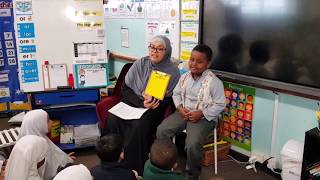
## 1. Overview
Al-Hidayah Islamic School (Bentley, WA) is a private, independent faith-based school that integrates high-quality academic programs with Islamic studies and values. The school emphasizes a nurturing, inclusive atmosphere where students are encouraged to grow academically, socially, and spiritually.
- School type: Private/Independent Islamic school
- School size: Small to medium
- Class size: Generally small to medium classes (roughly 20–25 students per class)
- Atmosphere/culture: Nurturing, inclusive, faith-centered, with an emphasis on community and student well-being
⸻
## 2. Academics & Learning
Al-Hidayah focuses on a well-rounded curriculum that blends core academics with religious education and character development.
- Academic strengths: Literacy and numeracy foundations, strong English instruction, Mathematics, Islamic Studies, Arabic language, and leadership development.
- Special programs: Gifted and talented pathways, accelerated learning options where available, integrated Islamic studies and Arabic language programs.
- NAPLAN / progress trends: Emphasis on steady progress in literacy and numeracy aligned to WA standards; ongoing assessment informs targeted support and extension where needed.
- Student-teacher ratios: Generally low-to-moderate ratios to support individualized instruction and classroom engagement.
- Support for diverse learners: EAL support for students where English is an additional language; SEN support and inclusive practices to help diverse learners access the curriculum.
⸻
## 3. Sports & Extracurricular Strengths
Extracurricular options support both physical development and creative expression, with opportunities common to Australian private schools.
- Sports offered: Soccer (football), Basketball, Athletics, Netball, Cricket-like activities and gym/fitness programs; opportunities to participate in inter-school events.
- Strong teams or achievements: Participation in local inter-school competitions and teams; emphasis on teamwork, sportsmanship, and personal bests.
- Music, arts, drama programs: Choir, Quranic recitation groups, performing arts, and occasional school productions.
- Clubs: Robotics, Chess, Coding, Debating, Quranic arts, and community service clubs.
- Partnerships: Connections with local community groups and Islamic community organizations to support competitions and enrichment activities.
⸻
## 4. Wellbeing & Pastoral Care
Prioritizing student well-being and a positive school climate, with clear supports and pathways.
- Anti-bullying approach: Proactive anti-bullying policies, zero-tolerance stance on harassment, and restorative practices to repair harm and promote understanding.
- House system: House groups to foster belonging, leadership, and healthy competition.
- Counsellors / wellbeing officers: Access to school counsellors or wellbeing staff to support emotional, social, and academic needs.
- Transition support for new students: Orientation programs, buddy/peer-mentoring systems, and targeted support during transitions between year levels.
⸻
## 5. Facilities
Facilities are designed to support a broad curriculum and a comfortable learning environment.
- Sports grounds: On-site or nearby facilities for physical education and team sports
- Libraries: Central library with books and digital resources
- Science labs: Well-equipped science laboratories for experiments and exploration
- Music/performing arts centers: spaces for music, drama, and performances
- Tech/innovation labs: Computer labs and technology-enabled learning spaces
- Cafeteria: On-site canteen or lunch facilities with healthy options
- Updated playgrounds: Safe, age-appropriate playgrounds and outdoor spaces
⸻
## 6. School Values & Community Culture
The school fosters a values-driven culture that supports respectful, responsible citizenship.
- School values / mission: Emphasis on faith-based values such as empathy, integrity, service, and community contribution alongside academic excellence.
- Leadership style: Collaborative leadership with opportunities for student voice and leadership roles (student councils, peer mentoring).
- Behaviour expectations: Clear codes of conduct emphasizing respect, responsibility, and safety.
- Community reputation: Strong ties with local families and the broader Islamic community; focus on trust, service, and inclusivity.
- Diversity & inclusion: Welcoming environment for families from diverse backgrounds; commitment to an inclusive culture while maintaining faith-based principles.
⸻
## 7. School Logistics & Daily Operations
Practical information to help families plan their day-to-day.
- School hours: Typical daytime schedule with variations by year level; front office hours align with school day.
- Before/after school care: Available in many cases, with supervision and activities offered.
- Uniform requirements: School uniform required; modest dress code reflecting school values.
- Transport (train/bus routes): Access to local transport options; information on nearby bus routes and walking routes.
- Canteen availability: On-site canteen or lunch program with halal options.
- Fees (low/medium/high ranges): Private independent school fees in the mid-range to higher range compared with public options; information on payment plans and potential concessions is often available.
⸻
## 8. Enrolment & Admissions
11. What is the enrolment process and timeline?
- Inquiry → online or paper application → submission of supporting documents (birth certificate, immunization records, family details) → written assessment or placement tasks if applicable → interview with families and, where appropriate, student assessment → offer of place and enrollment paperwork. Timelines vary by term and year level; early applications improve placement options.
12. Is there a waiting list, and how does it work?
- Yes, there may be a waiting list when a place is not immediately available. Priority is often given to siblings and families already connected with the school; applicants are placed on a waitlist and contacted as spaces open, with preference given to students whose enrollment aligns with program capacity.
13. Are there any entry requirements, tests, or interviews?
- Entry requirements typically include a family interview to assess alignment with school values and culture, and a student assessment (reading, writing, numeracy) to determine appropriate year placement. An Islamic Studies orientation and, where applicable, Arabic language assessment may be part of the process. Documentation such as birth certificate and immunization records are normally required.
14. Does the school accept mid-year transfers?
- Transfers may be possible mid-year depending on space and curriculum alignment. A transfer assessment and meeting with the principal or head of school are usually required to determine suitability and readiness for the current year.
⸻
## 9. Frequently Asked Questions
- Why Parents Choose This School?
- Many families choose the school for its combination of faith-informed values, strong academic foundations, supportive pastoral care, and a sense of community. The environment aims to nurture both character and achievement.
- What type of student thrives at this school?
- Students who are motivated to engage in a faith-based community, value collaborative learning, and seek a balanced mix of academics, religious studies, and extracurriculars typically thrive here. A respectful, proactive mindset helps students succeed.
- What opportunities are available for students to extend their skills (academics, sports, arts)?
- Opportunities include enrichment in English and Maths, accelerated or enrichment tasks where appropriate, sports teams, music and performing arts activities, Qur’an and Arabic language programs, debate and robotics clubs, and community service projects.
- How does the school communicate with parents?
- Regular communications include newsletters, parent-teacher meetings, student progress updates, and online portals. Open channels with teachers, coordinators, and administrative staff support ongoing engagement.
- What is the school’s approach to teaching and learning?
- A blended approach that integrates strong literacy and numeracy instruction with Islamic studies, faith-integrated character education, and inquiry-based learning to foster critical thinking and application.
- How does the school support students who need extra academic help?
- Targeted support is provided through small-group tutoring, reading or numeracy intervention, in-class differentiation, and collaboration with the pastoral and specialist teams.
- What support is available for academic challenges?
- Early identification, individualized learning plans, access to counselors or wellbeing staff, and coordinated support with teachers to adjust pace and provide stretch or remediation as needed.
- How does the school communicate with parents? (duplicate)
- See above: regular updates via newsletters, meetings, portals, and direct communication channels with teachers and leaders.
- What are the class sizes and how much individual attention do students receive?
- Class sizes are generally small to medium, allowing for more individualized attention and closer teacher-student relationships.
- What extracurricular and sports opportunities are available?
- A range of sports (e.g., soccer, basketball, athletics), clubs (robotics, chess, coding, debating), music and arts programs, and opportunities for inter-school participation.
- What facilities does the school offer (sports, science, arts)?
- Sports grounds, libraries, science labs, music/performing arts spaces, technology/innovation labs, canteen, and outdoor play areas.
- What is the school’s approach to technology and digital learning?
- Technology is integrated to support learning, with age-appropriate digital literacy, coding opportunities, and safe online practices embedded in the curriculum.
- What transport and accessibility options are available?
- Access to local bus routes and easy walking paths; school can provide guidance on transport options and accessibility details.
- What are the typical school fees or additional costs?
- Fees reflect the private/independent status and vary by year level and programs; families often have access to payment plans and information on potential concessions or scholarships.
⸻
## 10. Short Pros & Cons list
- Pros
- Faith-based, values-driven environment with a focus on character and academics
- Small-to-medium class sizes supporting individualized attention
- Integrated Islamic studies and Arabic language alongside core subjects
- Supportive wellbeing and pastoral care
- Range of extracurriculars including sports, arts, and clubs
- Strong sense of community and family engagement
- Cons
- Private/independent school fees; higher than public options
- Availability of places may be limited; potential waiting lists
- Religious studies framework requires alignment with school values
- Transport options may depend on location and surrounding services