Creekside College
Caroline Springs, VIC 3023
School Type
Government
Gender
Coeducational
Tuition Fees
N/A
Levels
PrimarySecondary
Overview
## 1. Overview
Creekside College is a public, co-educational secondary school serving students from Year 7 to Year 12 in the Caroline Springs area. As part of the Victorian public education system, the college offers pathways into Victorian Certificate of Education (VCE) and related programs, with a focus on preparing students for post-school options.
The school is a medium-sized campus with a supportive, inclusive culture that emphasizes student wellbeing, achievement and community involvement. Class sizes are typically in the mid-20s, enabling teachers to provide personalised support while maintaining a collaborative learning environment.
⸻
## 2. Academics & Learning
- Academic strengths: Strong focus on STEM, literacy and numeracy, with a solid English and Science program, and opportunities for leadership development and elective subjects that support well-rounded learning.
- Special programs: Pathways to VCE and Vocational Education & Training (VET), opportunities for gifted and talented students, and enrichment activities across key learning areas.
- NAPLAN trends: Recent years show steady improvement in NAPLAN results across cohorts, with ongoing emphasis on literacy and numeracy outcomes.
- Student-teacher ratios: Typical Victoria public-secondary class sizes with opportunities for targeted teacher support; approximate ratios commonly around the low- to mid-20s per class depending on subject and year level.
- Support for diverse learners: Dedicated support for EAL (English as an Additional Language) students, SEN (Special Educational Needs) supports, learning support staff, and inclusive education practices to help all students access the curriculum.
⸻
## 3. Sports & Extracurricular Strengths
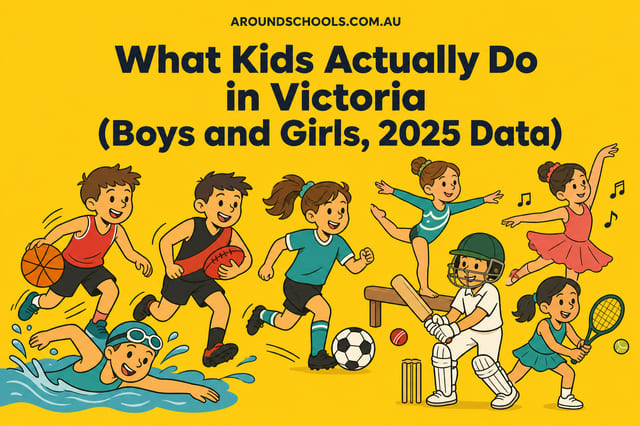
- Sports offered: Australian Rules Football, soccer, basketball, netball, cricket, athletics, swimming and other regional fixtures.
- Strong teams or achievements: Active involvement in district and regional competitions with teams reaching finals and earning representation opportunities.
- Music, arts, drama programs: School-wide music program, choir and instrumental lessons; drama productions and performing arts opportunities.
- Clubs: Robotics, chess, coding, debating and other skill-based clubs to suit a range of interests.
- Partnerships: Engagement with local clubs, community organizations and inter-school events to broaden competitions and learning opportunities.
⸻
## 4. Wellbeing & Pastoral Care
- Anti-bullying approach: Whole-school anti-bullying policies and programs, with student wellbeing checks and proactive intervention when needed.
- House system: House groups support pastoral care, whole-school events and healthy competition.
- Counsellors / wellbeing officers: Dedicated wellbeing team including student counsellors and welfare staff to support student mental health and adjustment.
- Transition support for new students: Orientation programs, buddy systems and targeted induction to help new students settle in smoothly.
⸻
## 5. Facilities
- Sports grounds
- Libraries
- Science labs
- Music/performing arts centers
- Tech/innovation labs
- Cafeteria
- Updated playgrounds
Facilities are designed to support a broad curriculum, from STEM and science to performing arts and daily student life, with spaces intended to foster collaboration and hands-on learning.
⸻
## 6. School Values & Community Culture
- School values / mission: Emphasis on respect, inclusion, integrity, excellence and teamwork as core values guiding everyday learning and behaviour.
- Leadership style: Collaborative leadership with opportunities for student voice and leadership through student councils and programs.
- Behaviour expectations: Clear code of conduct and positive behaviour supports that align with school values.
- Community reputation: Positive relationships with families and local community; strong emphasis on building a welcoming and supportive environment.
- Diversity & inclusion: Commitment to an inclusive culture that recognises and supports diverse backgrounds and learning needs.
⸻
## 7. School Logistics & Daily Operations
- School hours: Typical Victorian public-school day starts in the morning and finishes in the mid-to-late afternoon (commonly around 8:40 am–3:20 pm, with timetable variations by year/subject).
- Before/after school care: After-school care and supervision options are available via OSHC services or local providers; check current offerings with the school.
- Uniform requirements: School uniform is required, with guidelines provided by Creekside College (details available through the school’s communications).
- Transport (train/bus routes): Public transport options and local bus routes serving the Caroline Springs area; school is accessible by car and pedestrian routes; check current timetables for commuting.
- Canteen availability: On-site canteen or cafeteria services offering light meals and snacks.
- Fees (low/medium/high ranges): Core public education fees are generally modest; additional costs may include materials, activities, excursions and some uniform items.
⸻
## 8. Enrolment & Admissions
11. What is the enrolment process and timeline?
- Enrolment is handled through the school in line with Victorian Department of Education procedures. Families typically submit an enrolment form and required documents through Creekside College’s admissions process. In-zone applicants usually have priority; out-of-zone applications are considered based on vacancies and school policies. Intake timelines align with the Victorian school year, with early applications recommended for popular year levels.
12. Is there a waiting list, and how does it work?
- There can be a waiting list if vacancies are limited, particularly for certain year levels. Placement on the waiting list is managed by the school’s admissions team, with priority given to in-zone applicants and siblings where applicable. Keep in touch with the school for current vacancy and waitlist status.
13. Are there any entry requirements, tests, or interviews?
- Generally, entry exams or tests are not required for standard enrolment. Some programs or individual circumstances may involve brief assessments or discussions to determine support needs or eligibility for specific pathways. Most enrolments are straightforward for standard year-level entry.
14. Does the school accept mid-year transfers?
- Yes, mid-year transfers can be considered if there are vacancies. Prospective transferees should contact the admissions team, provide a letter of release from their current school if applicable, and complete the standard enrolment process.
⸻
## 9. Frequently Asked Questions
- Why Parents Choose This School?
Creekside College offers a welcoming, inclusive environment with strong academics, a broad range of co-curriculars, and a focus on student wellbeing and real-world learning. It suits families seeking a public option with pathways to VCE and practical learning experiences.
- What type of student thrives at this school?
Students who are motivated, collaborative and prepared to engage across academics and activities tend to thrive. The school supports diverse learners and provides pathways for both academic and practical talents.
- What opportunities are available for students to extend their skills (academics, sports, arts)?
Students can pursue extended learning in STEM, English and other subjects, participate in sports teams, join clubs (robots, coding, debating), and engage in music and drama programs. Pathways to VCE and VET programs support further study and skill development.
- How does the school communicate with parents?
Communication is typically via newsletters, emails, the school website, and parent-focused platforms (such as school management apps). Regular parent-teacher meetings and updates are common.
- What is the school’s approach to teaching and learning?
The school aligns with the Victorian Curriculum, emphasising inquiry-based learning, differentiation, ongoing assessment and practical applications to deepen understanding.
- How does the school support students who need extra academic help?
The school provides learning support teams, targeted interventions, EAL and SEN support, and small-group or one-on-one assistance where needed.
- What support is available for academic challenges?
Students facing challenges have access to tutoring, targeted interventions, adjustments within lessons, and coordination with specialists to help close gaps.
- How does the school communicate with parents?
See above—through multiple channels including newsletters, emails, and parent portals.
- What are the class sizes and how much individual attention do students receive?
Class sizes are typically in the mid-20s, with opportunities for individual attention through teacher consultations, tutoring and targeted support where needed.
- What extracurricular and sports opportunities are available?
A wide range of sports, clubs and arts opportunities exist, including robotics, coding, debating, chess, music programs and performing arts.
- What facilities does the school offer (sports, science, arts)?
The school has sports grounds, libraries, science labs, music/performing arts facilities, tech/innovation labs, a cafeteria and updated playgrounds.
- What is the school’s approach to technology and digital learning?
Digital learning is integrated across subjects with access to technology and devices to support modern teaching and learning practices.
- What transport and accessibility options are available?
Public transport access, school bus routes and walk/cycle routes are typically available; the school supports accessible facilities for students with varied needs.
- What are the typical school fees or additional costs?
Core education is publicly funded; additional costs may include materials, excursions, uniforms and activity fees. The school aims to be transparent about these costs.
⸻
## 10. Short Pros & Cons list
Pros
- Public, inclusive environment with pathways to VCE/VET
- Strong academics with focus on literacy and STEM
- Broad range of co-curriculars (sports, clubs, arts)
- Supportive wellbeing and pastoral care
- Flexible pathways and support for diverse learners
- Accessible transport options and engaged local community
- Modern facilities and dedicated learning spaces
Cons
- Class sizes, while typical for public schools, are larger than some private settings
- Out-of-zone applicants may face waitlists or limited vacancies
- Some specialized programs may require additional fees for materials or excursions
- Uniform requirements and related costs can be a consideration for families
- Mid-year transfers depend on vacancies and may require start-of-year integration
⸻
If you’d like, I can tailor any section to emphasize specific programs or achievements you want to highlight, or adjust language to match a particular tone for Aroundschools.
Social Media
What's Nearby

4am Academy
Basketball
Cs leisure centre & Eagle stadium, Caroline Springs

ThinkerLab
STEM
12 Burke Rd , Burnside Heights

Emu Education
EnglishMathsLearning Centre
8 / 39 Eucumbene Dr, Ravenhall

Wish Upon a Star Celebrations and Gifts
Event Entertainment
Cairnlea LPO, PO Box 5069, Cairnlea

Jeongsin Taekwondo
Taekwondo
5 commercial st, Maidstone

State Swim Swimming Schools
Swimming
The Crossing, Caroline Springs

Caroline Springs Civic Centre/Library
Library
Caroline Springs Blvd, Caroline Springs

Caroline Springs Town Centre Recreation Reserve
Park
The Parade, Caroline Springs
Lake Caroline Reserve
Park
Caroline Springs Blvd, Caroline Springs
Upcoming Events Nearby
📅
Keon Park Children's Hub Monthly Drop-in Gardening Group
📅
EFA: Sat Match Development Program
📅
Children's yoga - JEM | 7th Mar-2026 to 17th Apr-2027 💛
📅
Testing Pickleball course
📅
Kids & Teens School Holiday Art Workshop Melbourne - Glorious Studio
📅
Kids & Teens Creative Art Workshop – 2 October
Nearby Schools
Lakeview Senior College
College Street, Caroline Springs VIC 3023 Australia
Government
Coeducational
Secondary

Catholic Regional College Caroline Springs
10 College Drive, Caroline Springs VIC 3233 Australia
Catholic
Coeducational
Secondary
🏫
Brookside College
Federation Way , Caroline Springs VIC 3023 Australia
Government
Coeducational
Primary+
🏫
Christ the Priest Primary School - Caroline Springs
54 Caroline Springs Boulevard, Caroline Springs VIC 3023 Australia
Catholic
Coeducational
Primary
🏫
Kororoit Creek Primary School
130 Tenterfield Drive, Burnside Heights VIC 3023 Australia
Government
Coeducational
Primary
🏫
Burnside Primary School
35 Lexington Dr, Burnside VIC 3023, Australia
Government
Coeducational
Primary