My College
Dallas, VIC 3047
School Type
Independent
Gender
Coeducational
Tuition Fees
$1,610 - $1,750
Levels
Primary
Contact Information
Overview
## Overview
Public, co-educational school serving the VIC Dallas 3047 area. The school offers a balanced environment that combines strong academic programs with broad wellbeing and community initiatives.
Size: medium campus with a diverse student body and active engagement across year levels. Class sizes are designed to be manageable, typically around the low to mid-20s, allowing for individual attention and collaborative learning.
⸻
## Academics & Learning
- Academic strengths: solid English and mathematics foundations, with targeted programs in STEM and languages to broaden student capabilities.
- Special programs: supports for accelerated learning and gifted/talented pathways; opportunities to engage in enriched learning experiences within the regular curriculum.
- NAPLAN trends: steady year-on-year improvement in reading and numeracy indicators over recent years, with ongoing focus on literacy and numeracy development.
- Student-teacher ratios: generally around 1:12 to 1:16, enabling some personalised guidance while maintaining a broad classroom environment.
- Support for diverse learners: dedicated EAL support, SEN assistance, and an inclusive education team to help students progress at their own pace.
⸻
## Sports & Extracurricular Strengths
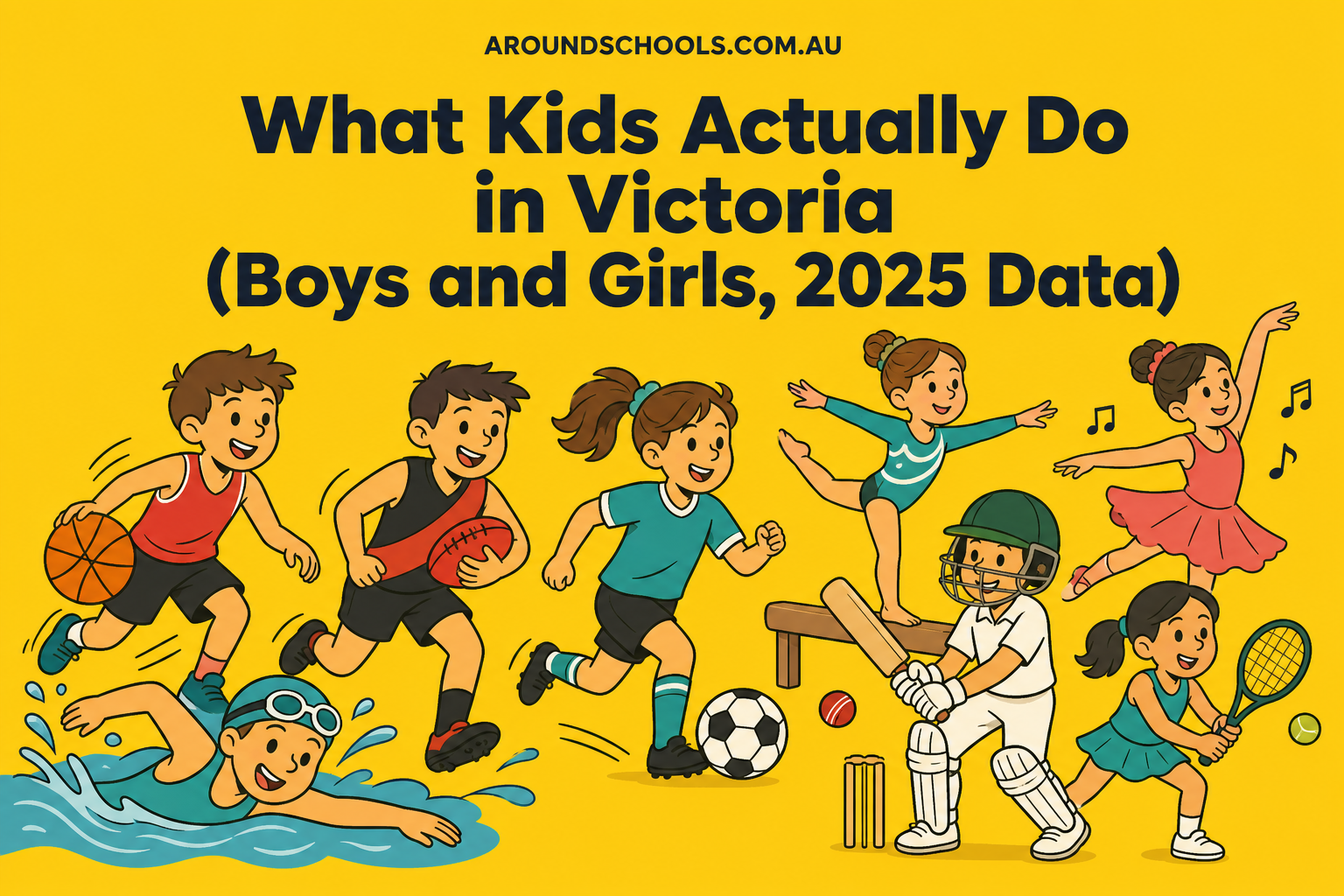
- Sports offered: cricket, soccer, netball, basketball, athletics, and swimming programs seasonally; a range of intramural and inter-school activities.
- Strong teams or achievements: competitive inter-school teams with regional presence and a track record of building teamwork and resilience.
- Music, arts, drama programs: active music ensembles, drama productions, and access to performing arts opportunities for a well-rounded co-curricular experience.
- Clubs: robotics, chess, coding, debating, and other interest-based clubs to nurture curiosity and problem-solving.
- Partnerships: collaboration with local clubs and regional competitions to extend learning beyond the classroom.
⸻
## Wellbeing & Pastoral Care
- Anti-bullying approach: whole-school anti-bullying policy with clear reporting channels, student voice, and ongoing education on respectful behaviour.
- House system: four-house structure that supports healthy competition, mentorship, and community belonging.
- Counsellors / wellbeing officers: on-site welfare team providing counseling, mental health support, and wellbeing check-ins.
- Transition support for new students: orientation programs, buddy systems, and targeted onboarding to help students settle quickly.
⸻
## Facilities
- Sports grounds: well-maintained fields and courts for on-site athletics and team sports.
- Libraries: welcoming library spaces with access to digital resources and study zones.
- Science labs: dedicated laboratories for practicals and experimentation across science subjects.
- Music/performing arts centers: facilities for rehearsals, concerts, and productions.
- Tech/innovation labs: spaces for design, coding, and hands-on technology projects.
- Cafeteria: on-site canteen with healthy meal options and daily service.
- Updated playgrounds: age-appropriate outdoor play and interaction spaces contributing to recreational time.
⸻
## School Values & Community Culture
- School values / mission: focus on respect, resilience, inclusion, and lifelong learning; emphasis on character as well as achievement.
- Leadership style: collaborative and student-inclusive with opportunities for student leadership and input into school improvement.
- Behaviour expectations: clear guidelines promoting positive conduct, accountability, and mutual respect.
- Community reputation: supportive and engaged school community with active parent involvement and local partnerships.
- Diversity & inclusion: commitment to equity, cultural awareness, and inclusive practices across all-year groups.
⸻
## School Logistics & Daily Operations
- School hours: standard school day with start and finish times aligned to the local timetable; early start and late finish variations are possible for cohorts.
- Before/after school care: available to eligible families, with supervised options before and after school hours.
- Uniform requirements: formal school uniform policy with specified items; details provided at enrolment.
- Transport (train/bus routes): accessible via local bus services and nearby train stations; information on routes provided by the school.
- Canteen availability: on-site canteen offering daily meals and snack options.
- Fees (low/medium/high ranges): for a public school, general education costs are modest with potential additional charges for materials, excursions, and optional programs.
⸻
## Enrolment & Admissions
11. What is the enrolment process and timeline?
- Start by expressing interest through the school’s admissions process during the annual intake period. Submit required documents (proof of identity, immunisation status, and any location-related information). If you live within the school’s catchment area, you’ll receive priority consideration. Offers are typically communicated within the designated timetable window after applications close.
12. Is there a waiting list, and how does it work?
- Yes, waitlists can occur when the school is over-subscribed. Waitlisted families are ranked based on factors such as catchment eligibility, availability of places, and any sibling or priority considerations. Offers from the waitlist are made as vacancies arise.
13. Are there any entry requirements, tests, or interviews?
- For public schools: generally no entrance tests; however, immunisation proof and residency documentation are required. Some programs or the independent arm of the school (if applicable) may conduct brief information sessions or interviews as part of the process. In most cases, there is no formal testing for year-level entry.
14. Does the school accept mid-year transfers?
- Mid-year transfers are possible where vacancies exist. Families should contact the school as early as possible to discuss availability, required documentation, and transitional support arrangements.
⸻
## Frequently Asked Questions
- Why Parents Choose This School?
- A balanced emphasis on academics, wellbeing, and community; supportive staff; and opportunities across sports, arts, and clubs.
- What type of student thrives at this school?
- Curious, collaborative learners who enjoy a supportive environment, with room to grow academically, athletically, and creatively.
- What opportunities are available for students to extend their skills (academics, sports, arts)?
- Enriched programs in STEM and English, leadership and gifted/talented pathways, competitive sports teams, performing arts, and a range of clubs (robotics, coding, debating).
- How does the school communicate with parents?
- Regular email updates, a parent portal, newsletters, and scheduled parent-teacher interviews; open channels for concerns and feedback.
- What is the school’s approach to teaching and learning?
- Student-centered and inclusive, with data-informed practices, differentiation to support diverse learners, and emphasis on critical thinking and collaboration.
- How does the school support students who need extra academic help?
- Targeted learning support, small-group interventions, tutoring options, and access to SEN and EAL services.
- What support is available for academic challenges?
- Timetabled support blocks, one-on-one or small-group assistance, and ongoing monitoring by the learning support team.
- How does the school communicate with parents?
- See above: portals, newsletters, and parent-teacher interviews are standard channels.
- What are the class sizes and how much individual attention do students receive?
- Class sizes are typically in the low-to-mid 20s, with additional targeted support available through learning support staff and small-group sessions.
- What extracurricular and sports opportunities are available?
- A wide range including cricket, soccer, netball, basketball, athletics, music, drama, robotics, chess, coding, and debating clubs.
- What facilities does the school offer (sports, science, arts)?
- Modern sports grounds, libraries, science labs, music/performing arts center, tech/innovation labs, a cafeteria, and updated playgrounds.
- What is the school’s approach to technology and digital learning?
- Emphasis on digital literacy, available devices and platforms for learning, with safety and responsible use guidelines.
- What transport and accessibility options are available?
- Local bus routes and nearby train access, with accessible facilities and supportive transportation information for families.
- What are the typical school fees or additional costs?
- For public schools, basic education costs are modest; additional costs may include uniforms, activity fees, and excursions.
⸻
## Short Pros & Cons list
- Pros:
- Balanced academics with strong student support
- Active wellbeing and pastoral care
- Broad range of sports, arts, and clubs
- Inclusive culture and diverse community
- Flexible enrolment options and mid-year transfer potential
- Cons:
- As a medium-size school, demand may outstrip places at peak intake periods
- Public schools have limited control over some co-curricular program timings compared with private options
- Uniform requirements and occasional material fees may apply
- Some specialized programs may be available only in specific year levels or via selective pathways
School Fees
| Year Level | Local Fees |
|---|---|
| Year 1 | $1,610 |
| Year 2 | $1,610 |
| Year 3 | $1,750 |
| Year 4 | $1,750 |
| Year 5 | $1,750 |
Social Media
What's Nearby

Glenroy Lions FC
Soccer
123 Justin Ave, Glenroy

Elite Tennis Academy and AATC
Tennis
Corner of Bell Street and Pentridge Blvd, Coburg

3D Printer Gear
Learning Centre3D Printing
781 High St, Reservoir

Paint + Pop: Face Painting + Pop Up Photobooth
Painting
45 Salisbury St, Moonee Ponds
My First Gym Craigieburn
Gymnastics
Shop 2AD 420/440 Craigieburn Rd, , Craigieburn

Tim Credible the Magician
MagicianEvent Entertainment
Melbourne, Epping

The Jellybean Gym
GymnasticsSensory Play
61-71 Hall Street, Moonee Ponds
Musical Minds
MusicLearning Centre
316 High Street, Preston

Mary’s Piano School
Piano
197 Smith Street, Thornbury
Upcoming Events Nearby
📅
Keon Park Children's Hub Monthly Drop-in Gardening Group
📅
EFA: Free Sat Match Development Program
📅
Persian Playgroup - Facilitated
📅
Kids & Teens School Holiday Art Workshop Melbourne - Glorious Studio
📅
Kids & Teens School Holiday Art Workshop – 24 September
📅
Kids & Teens Creative Art Workshop – 2 October
Nearby Schools

Sirius College - Meadow Fair
Lilliput Street, Broadmeadows VIC 3047 Australia
Independent
Boys
Kinder+

Ilim College
30 Inverloch Crescent, Dallas VIC 3047 Australia
Independent
Coeducational
Primary+
🏫
Broadmeadows Primary School
62-70 Blair Street , Broadmeadows VIC 3047 Australia
Government
Coeducational
Primary

Dallas Brooks Community Primary School
46 Kiewa Cresent, Dallas VIC 3047 Australia
Government
Coeducational
Primary

Hume Central Secondary College
60-78 Tanderrum Way, Broadmeadows VIC 3049 Australia
Government
Coeducational
Secondary
🏫
Broadmeadows Valley Primary School
Dimboola Road , Broadmeadows VIC 3047 Australia
Government
Coeducational
Primary