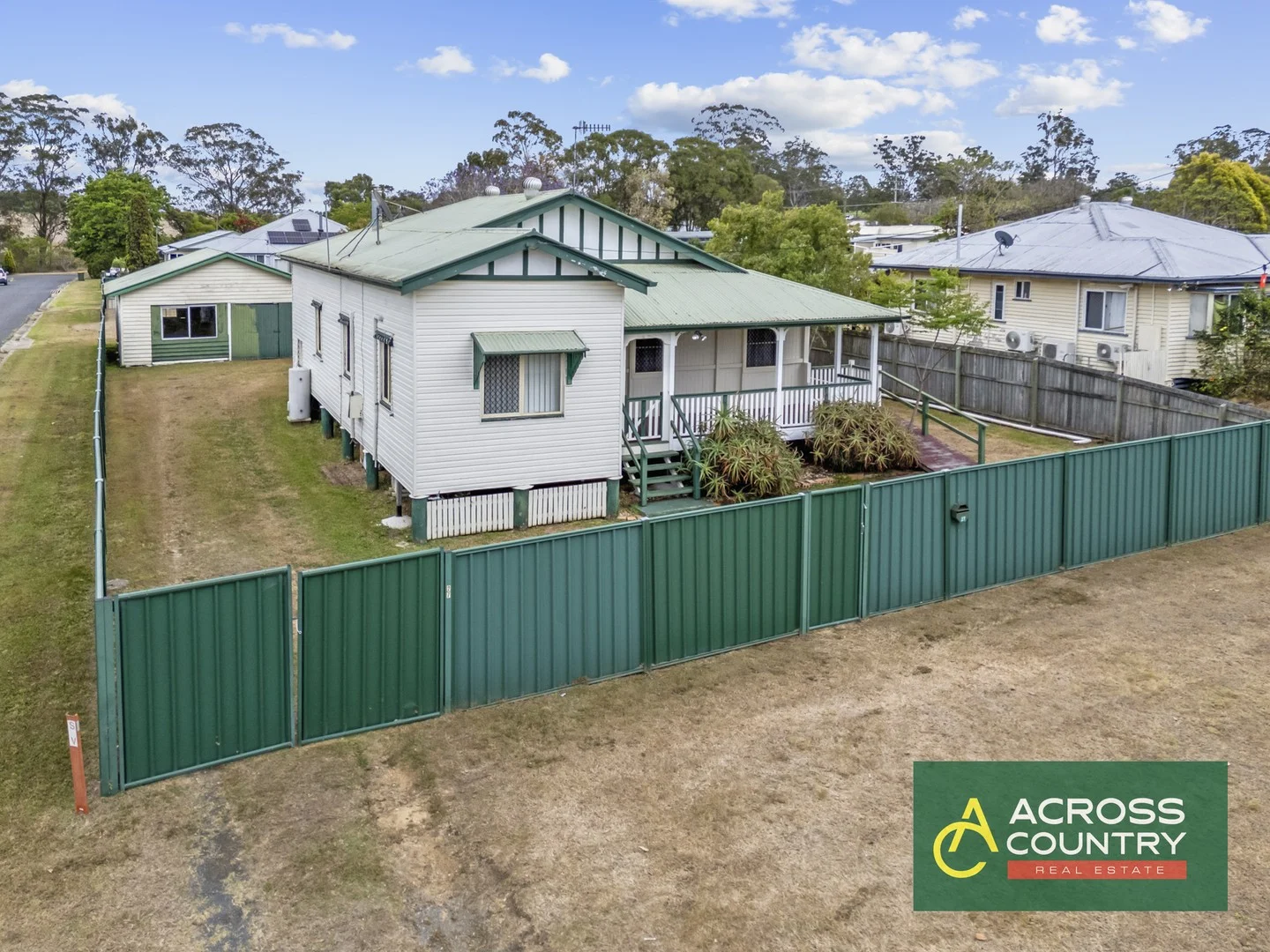
 Government primary school in Wheatlands
Wheatlands State School
Wheatlands, QLD 4606
Wheatlands State School is a public, co-educational primary school catering for Prep to Year 6. It sits as a medium-sized campus that embraces an inclusive, supportive community where students are encouraged to try new things and…
About Wheatlands State School
Read the full description
Overview
Wheatlands State School is a public, co-educational primary school catering for Prep to Year 6. It sits as a medium-sized campus that embraces an inclusive, supportive community where students are encouraged to try new things and grow across academic, social and personal domains.
Class sizes are typically around 20–25 students, allowing teachers to tailor instruction and provide plenty of individual attention. The atmosphere is nurturing and collaborative, with a strong emphasis on student wellbeing, teamwork, and respect for others as foundations for learning. ⸻
Academics & Learning
- Academic strengths: Strong foundations in literacy and numeracy, with ongoing development in STEM and languages; emphasis on reading comprehension, writing skills, and critical thinking. Leadership opportunities and collaborative projects help build confidence beyond the classroom.
- Special programs: Gifted and Talented (G&T) pathways and accelerated learning options are offered where available, along with participation in regional STEM activities and enrichment programs.
- Support for diverse learners: Strong support for diverse learners including EAL (English as an Additional Language) programs, SEN (special educational needs) services, and inclusive classrooms with individual learning plans as required. ⸻
Sports & Extracurricular Strengths
- Sports offered: Netball, basketball, soccer, cricket, rugby league, athletics, swimming, and other district-level sports through school teams.
- Strong teams or achievements: Regular participation in district events with a focus on teamwork, sportsmanship, and personal bests; opportunities to represent the school in regional competitions.
- Music, arts, drama programs: Active music program, school choir or ensembles, annual concerts, and involvement in drama and visual arts activities.
- Clubs: Robotics, coding, chess, debating, and other interest clubs to broaden skills beyond core academics.
- Partnerships: Connections with local clubs and regional competitions that provide students with opportunities to compete and learn outside the classroom. ⸻
Wellbeing & Pastoral Care
- Anti-bullying approach: Comprehensive anti-bullying policies and wellbeing programs with clear reporting channels and ongoing education for staff and students.
- House system: A house-based framework fosters belonging, team spirit, and healthy competition across events and activities.
- Counsellors / wellbeing officers: Access to school counsellors or wellbeing staff to support student mental health, resilience, and social development.
- Transition support for new students: Structured induction for new students, buddy systems, and targeted transition planning to help families settle in smoothly. ⸻
Facilities
- Sports grounds
- Libraries
- Science labs
- Music/performing arts centers
- Tech/innovation labs
- Cafeteria
- Updated playgrounds ⸻
School Values & Community Culture
- School values / mission: A values-driven culture focused on respect, responsibility, inclusion, and collaboration to prepare students as capable, compassionate citizens.
- Leadership style: Collaborative, student-centered leadership with opportunities for student voice through committees and the student council.
- Behaviour expectations: Clear behavioural expectations supported by positive reinforcement and restorative practices to address issues and support growth.
- Community reputation: Known for an inclusive, supportive environment with strong engagement from families and the wider community.
- Diversity & inclusion: Diverse student body with explicit inclusion practices and support for EAL and SEN students to ensure all learners thrive. ⸻
School Logistics & Daily Operations
- School hours: Typically 9:00 am–3:00 pm, with supervision and activities available before and after school as needed.
- Before/after school care: Before- and after-school care options available (often via external providers or school-supported programs).
- Uniform requirements: School uniform is required; details provided by the school office and uniform shop.
- Transport (train/bus routes): Access to local bus routes and public transport; clear drop-off/pick-up procedures and parking guidance.
- Canteen availability: On-site canteen offering a range of healthy options.
- Fees (low/medium/high ranges): Fees are modest for essential items with occasional costs for excursions and activities; information provided at enrolment. ⸻
Enrolment & Admissions
- What is the enrolment process and timeline?
- Confirm catchment eligibility, gather required documents (birth certificate, immunisation records, proof of address), complete the online enrolment form, and submit supporting documents. The school may conduct an information session or introductory meeting, after which offers of placement are made and a start date is arranged. Enrolment timelines vary by term and demand. ⸻
- Is there a waiting list, and how does it work?
- There may be a waiting list when the school is at capacity or for out-of-area enrolments. Offers are typically made in catchment order, with space availability and priority considerations guiding placements. ⸻
- Are there any entry requirements, tests, or interviews?
- There are generally no formal entrance tests. Some families may be asked to participate in information sessions, and assessments may be considered for EAL or SEN planning to support a smooth transition. ⸻
- Does the school accept mid-year transfers?
- Yes, subject to space and transfer processes; families will need to provide current school reports, immunisation records, and proof of address, and coordinate with the school’s enrolment team to complete the transfer. ⸻
Frequently Ask Questions
- Why Parents Choose This School?
- Parents value the supportive teachers, inclusive culture, strong focus on literacy and numeracy, and a broad range of active clubs and sports.
- What type of student thrives at this school?
- Curious, collaborative, motivated learners who engage across academics, sport, arts and community activities tend to thrive here.
- What opportunities are available for students to extend their skills (academics, sports, arts)?
- Enrichment in STEM clubs, coding and robotics, debate, and leadership opportunities; diverse sports programs and music/drama productions.
- How does the school communicate with parents?
- Regular newsletters, school app/portal, emails, and scheduled parent-teacher interviews; information evenings and notices as needed.
- What is the school’s approach to teaching and learning?
- Student-centered, differentiated instruction with emphasis on literacy and numeracy, supported by evidence-based practices and ongoing assessment.
- How does the school support students who need extra academic help?
- In-class targeted interventions, additional small-group support, EAL and SEN services, and referrals for specialised assistance when required.
- What support is available for academic challenges?
- Additional tutoring options, targeted interventions, and coordinated support plans to address specific learning needs.
- How does the school communicate with parents?
- See above: newsletters, app/portal, emails, and parent-teacher interviews. (Repeated to reflect common questions.)
- What extracurricular and sports opportunities are available?
- A broad mix of sports (netball, basketball, soccer, cricket, rugby league, athletics, swimming), plus robotics, chess, coding, debating, and arts programs.
- What facilities does the school offer (sports, science, arts)?
- Comprehensive facilities including sports grounds, library, science labs, music/performing arts spaces, tech/innovation labs, and a canteen.
- What is the school’s approach to technology and digital learning?
- Integrated digital literacy across curriculum, with access to ICT facilities and online learning platforms to support learning everywhere.
- What transport and accessibility options are available?
- Local bus routes and public transport access, clear drop-off/pick-up procedures, and accessible facilities as part of daily operations.
- What are the typical school fees or additional costs?
- Fees are modest for essential items; additional costs may arise for excursions, special programs, and extra-curricular activities. ⸻
Short Pros & Cons list
- Pros
- Inclusive, nurturing environment with a strong focus on core literacy and numeracy - Broad range of sports, arts, and club opportunities - Supportive wellbeing framework and clear student transition processes - Modern facilities and active engagement with the local community
- Cons
- Transport options can vary for families outside the immediate catchment - Waitlists may apply for out-of-area enrolments or peak entry periods - Uniform costs and occasional excursion fees may be expected for some families
A few things parents ask
What type of school is Wheatlands State School?
Wheatlands State School is a Government, Co-ed school in Wheatlands, QLD, offering Primary year levels.
Is Wheatlands State School a public or private school?
Wheatlands State School is a public school. It is government-funded and part of the QLD public education system, so it is generally free for local students to attend, aside from voluntary contributions and levies.
Where is Wheatlands State School located?
Wheatlands State School is located at State School, 422 Byee Rd, Wheatlands QLD 4606, Australia, Wheatlands, QLD, 4606.
Compare with nearby schools
The closest schools to Wheatlands State School, side by side. Fees appear where a school publishes them; activities and events are what is listed on AroundSchools within a short drive of each school.
| School | Distance | Sector | Gender | Years | Fees / yr | Kids' activities within 2 km | Events within 3 km |
|---|---|---|---|---|---|---|---|
| Wheatlands State SchoolThis school | Here | Government | Co-ed | Primary | — | 0 | 0 |
| Murgon State High School | 9.8 km | Government | Co-ed | Secondary | — | 0 | 0 |
| Murgon State School | 9.8 km | Government | Co-ed | Primary · Secondary | — | 0 | 0 |
| St Joseph's Catholic Primary School - Murgon | 10.1 km | Catholic | Co-ed | Primary · Secondary | — | 0 | 0 |
| Wondai State School | 11.2 km | Government | Co-ed | Primary · Secondary | — | 0 | 0 |
| Cherbourg State School | 13.1 km | Government | Co-ed | Primary · Secondary | — | — | — |
| Tingoora State School | 15.5 km | Government | Co-ed | Primary · Secondary | — | — | — |
Sorted by distance, not ranked.
Schools nearby
The closest schools, nearest first.