 Government primary school in Mitcham
Mitcham Primary School
Mitcham, VIC 3132
Mitcham Primary is a public, co-educational primary school serving the Mitcham community. As a medium-sized government school, it aims to balance strong academic learning with a welcoming, inclusive atmosphere where students feel…
About Mitcham Primary School
Read the full description
- Overview
Mitcham Primary is a public, co-educational primary school serving the Mitcham community. As a medium-sized government school, it aims to balance strong academic learning with a welcoming, inclusive atmosphere where students feel part of a supportive school family. Typical class sizes are in the low to mid-20s, with targeted support available to students from diverse backgrounds to help everyone participate and thrive.
The school emphasises a nurturing, respectful culture that values resilience, collaboration and curiosity. It seeks to provide meaningful learning experiences across core subjects and extra-curriculars, with a focus on wellbeing and positive relationships between students, staff and families.
- Academics & Learning
- Academic strengths: literacy and numeracy are prioritized, with emphasis on language development, reading comprehension and mathematical thinking. There are opportunities to engage in STEM topics and digital literacy within the curriculum, and programs to support English as an Additional Language (EAL) learners.
- Special programs: elements of gifted and talented or accelerated learning may be available in some grades, along with coding/digital literacy activities and enrichment opportunities embedded in classroom learning.
- Support for diverse learners: dedicated support for EAL and SEN, inclusive teaching practices, in-class interventions and access to learning support staff to assist students needing extra help.
- Sports & Extracurricular Strengths
- Sports offered: a broad range of school-based sports and physical activities, including athletics, netball, soccer/cricket, cross-country and other locally organized activities.
- Strong teams or achievements: opportunities to compete in district-level events and inter-school competitions, with emphasis on participation, teamwork and personal bests.
- Music, arts, drama programs: school concerts, music activities (e.g., recorder or choir programs) and opportunities to participate in drama and performance.
- Clubs: robotics, coding, chess, debating and other inquiry-based or technology-related clubs are commonly available to extend student interests.
- Partnerships: connections with local community clubs and organizations to support sport, coding, robotics or arts experiences; participation in external competitions and showcases as offered.
- Wellbeing & Pastoral Care
- Anti-bullying approach: clear anti-bullying policies, proactive wellbeing programs, and restorative practices to build respectful, safe relationships among students.
- House system: a house-based structure helps foster belonging, with regular events and recognition tied to positive behaviours and teamwork.
- Counsellors / wellbeing officers: dedicated staff or access to wellbeing professionals to support social-emotional learning, concerns and advice for students and families.
- Transition support for new students: orientation activities, buddy programs and targeted supports to help new students settle in smoothly.
- Facilities
- Sports grounds: outdoor play and sports spaces suitable for PE, ball games and fitness activities.
- Libraries: well-equipped library spaces supporting reading, research and independent learning.
- Science labs: functional science spaces for hands-on experiments and investigations.
- Music/performing arts centers: spaces for music education, drama activities and performances.
- Tech/innovation labs: practical spaces for coding, digital projects and hands-on STEAM activities.
- Cafeteria: on-site meals or lunch service options, depending on the school’s arrangement.
- Updated playgrounds: modern play equipment and outdoor learning areas to support active play and exploration.
- School Values & Community Culture
- School values / mission: focus on respect, inclusion, responsibility, curiosity and resilience as foundational qualities for school life.
- Leadership style: relatively distributed and student-inclusive, with opportunities for leadership roles and student voice in school decisions.
- Behaviour expectations: clear codes of conduct prioritizing respectful, safe and responsible behaviour, with positive reinforcement and supportive guidance.
- Community reputation: generally viewed as a welcoming, family-friendly school with active parent involvement and a collegial staff culture.
- Diversity & inclusion: inclusive practices that welcome students from diverse backgrounds and support equity of access to learning and activities.
- School Logistics & Daily Operations
- School hours: typically a morning start around 9:00 am and a finishing time around 3:30 pm; exact hours can vary by year level and term.
- Before/after school care: OSHC or similar arrangements are commonly available to families needing care outside hours.
- Uniform requirements: a clear uniform policy with seasonal options; families purchase standard school uniforms through approved suppliers.
- Transport: accessible by local bus routes and nearby train stations; walking and cycling are supported with appropriate drop-off zones and bike storage where available.
- Canteen availability: canteen or lunch-order options may be available on-site or through local providers.
- Fees: public primary schools typically have low to moderate costs, with compulsory contributions for certain resources and optional charges for camps, excursions and materials.
- Enrolment & Admissions
- What is the enrolment process and timeline?
- Check eligibility and availability with the school or local education authority.
- Complete the school’s enrolment form (online or in person) and provide required documents (proof of address, student details, birth certificate, immunisation status as required).
- Submit supporting documents and applications within the published timelines; the school will advise on next steps and any interview or information sessions if applicable.
- Offers and placement are communicated by the school in collaboration with the local education authority; timelines vary by intake year and demand.
- Is there a waiting list, and how does it work?
- Waiting lists can occur when intake capacity is limited. If a waitlist applies, the school will provide details on how entries are prioritized (e.g., proximity, siblings, date of application) and expected wait times.
- Are there any entry requirements, tests, or interviews?
- For most public primary applications, there are no entrance tests or formal interviews. Some programs or transitional supports may involve informal discussions or information sessions. Verification of documents and eligibility is typically required.
- Does the school accept mid-year transfers?
- Yes, mid-year transfers can be possible if space is available and the receiving year level has capacity. Families should contact the school promptly to discuss availability, transfer procedures and any required documentation.
- Frequently Asked Questions
- Why Parents Choose This School?
Parents often cite a welcoming, inclusive atmosphere, a strong focus on wellbeing, supportive staff, solid literacy and numeracy programs, and a range of extracurricular options that help students grow socially and academically.
- What type of student thrives at this school?
Students who are curious, collaborative, respectful, and motivated to engage across academics and activities tend to thrive. A positive home-school communication rhythm supports those who are eager to participate and take on leadership or service opportunities.
- What opportunities are available for students to extend their skills (academics, sports, arts)?
There are enrichment opportunities in reading and math, STEM activities, coding and digital learning, music and drama programs, sports teams, robotics, debating and other clubs that extend skills beyond the core curriculum.
- How does the school communicate with parents?
Regular newsletters, emails, a school website or portal, parent-teacher interviews, and notices about events and student progress help keep families informed and engaged.
- What is the school’s approach to teaching and learning?
The school follows a student-centered, evidence-based approach with differentiation to meet diverse needs, integrated technology for learning, and emphasis on literacy, numeracy and critical thinking.
- How does the school support students who need extra academic help?
In-class supports, targeted interventions, EAL and SEN assistance, and access to learning support staff help students who require additional help.
- What support is available for academic challenges?
Dedicated staff and programs identify and address challenges early, with personalized learning plans, small-group or one-on-one support and ongoing monitoring of progress.
- How does the school communicate with parents? (repeated)
See above: newsletters, portals, email, interviews and events.
- What extracurricular and sports opportunities are available?
A broad range of sports, arts, music, coding/robotics, chess and debate clubs, plus district-level competitions and performances when offered.
- What facilities does the school offer (sports, science, arts)?
Sports grounds, library, science labs, music/performing arts spaces, tech/innovation labs, on-site canteen (where applicable), and updated playgrounds.
- What is the school’s approach to technology and digital learning?
Integrated ICT across learning with appropriate devices and platforms, digital citizenship and online safety as core components.
- What transport and accessibility options are available?
Local public transport options (bus/train), walking/ciking routes, and accessible facilities where applicable.
- What are the typical school fees or additional costs?
Public primary schools have low to moderate costs, with potential additional charges for camps, excursions, materials, and uniforms.
- Short Pros & Cons list
Pros
- Public, inclusive environment with a focus on wellbeing and student support
- Solid literacy and numeracy emphasis with opportunities in STEM and digital learning
- Broad range of extracurricular activities and clubs
- Active parent involvement and strong community feel
- Support for diverse learners (EAL, SEN) and transition programs for new students
Cons
- Availability of some programs or spaces can vary year to year depending on enrollment and staffing
- Enrolment and mid-year transfer processes depend on space and district allocations
- Uniform and incidental costs can add to overall expenses (as with many schools)
Note: The above content is an informational overview intended to help parents assess Mitcham Primary. For precise details (current enrolment procedures, exact facilities, up-to-date programs, and official timelines), please contact the school directly and consult the Victorian Department of Education guidelines.
A few things parents ask
Does Mitcham Primary School have a catchment area?
Yes. Mitcham Primary School serves the following official intake zone: Mitcham Primary School (primary, 2026). Living inside a zone makes this your designated local public school. Whether a place is offered depends on the state’s enrolment policy and the year you apply — it is not a guarantee, and where current students live does not define the boundary. Use the AroundSchools catchment checker to see whether your address falls inside it, then verify with the state education department’s own tool.
What type of school is Mitcham Primary School?
Mitcham Primary School is a Government, Co-ed school in Mitcham, VIC, offering Primary year levels.
Is Mitcham Primary School a public or private school?
Mitcham Primary School is a public school. It is government-funded and part of the VIC public education system, so it is generally free for local students to attend, aside from voluntary contributions and levies.
Where is Mitcham Primary School located?
Mitcham Primary School is located at 294 Mitcham Road, Mitcham VIC 3132 Australia, Mitcham, VIC, 3132.
Compare with nearby schools
The closest schools to Mitcham Primary School, side by side. Fees appear where a school publishes them; activities and events are what is listed on AroundSchools within a short drive of each school.
| School | Distance | Sector | Gender | Years | Fees / yr | Kids' activities within 2 km | Events within 3 km |
|---|---|---|---|---|---|---|---|
| Mitcham Primary SchoolThis school | Here | Government | Co-ed | Primary | — | 28 | 2 |
| Mullauna College | 200 m | Government | Co-ed | Secondary | — | 28 | 2 |
| St Johns Primary School - Mitcham | 900 m | Catholic | Co-ed | Primary | — | 28 | 2 |
| Antonio Park Primary School | 1.4 km | Government | Co-ed | Primary | — | 42 | 2 |
| Heatherwood School | 1.6 km | Government | — | — | — | 22 | 3 |
| Donvale Primary School | 1.9 km | Government | Co-ed | Primary | — | 20 | 3 |
| Mount Pleasant Road Primary School | 2.1 km | Government | Co-ed | Primary | — | 31 | 3 |
Sorted by distance, not ranked. Check whether your address is in the catchment
Make a little more of the trip
Parks, playgrounds and libraries near the school.
Kids' activities nearby
Classes and clubs listed within a short drive of the school.
Schools nearby
The closest schools, nearest first.


Properties for sale or rent nearby55

Land Size: 725 m²
Property Type: House
Listing Type: Residential
Status: Active
Summary: Generous Family Living on 725sqm (approx.) in a Quiet Donvale Setting
Description: Occupying a substantial 725sqm (approx.) allotment, this well-kept family residence offers space, practicality and considered improvements within a tightly held Donvale pocket. The home presents a flexible floorplan with multiple living areas and generous accommodation, supporting everyday family living while allowing for separation and privacy where required. Comfort is enhanced by zoned ducted heating throughout, with a fireplace and additional heater in the family room creating a warm and cosy environment in winter. Bedrooms are well proportioned, including three bedrooms plus a private, oversized master bedroom positioned on the first floor, featuring an ensuite, spa and private balcony. Central bathrooms and functional service areas further support family living, while the home enjoys generous natural sunlight both morning and evening . Efficiency and storage have been carefully considered throughout. Extensive storage above the garage provides valuable additional space rarely found in homes of this era, while further internal storage enhances daily usability. Energy efficiency is supported by solar panels and a fairly new hot water system, together with a 3000L water tank servicing outdoor and garden use. The rear yard is private and expansive, offering excellent scope for entertaining, family use or future enhancement (STCA). A rear entertaining area with BBQ enjoys direct access to the kitchen and family room, ideal for gatherings and relaxed family living. Additional features include a chicken coop that can be easily converted into storage, along with two large vegetable gardens. Secure garaging, an oversized carport and ample off-street parking further reinforce the home's practical appeal, with space for up to three additional vehicles comfortably at the front of the property. Located close to schools, local shops, parks and public transport - including Tunstall Square Shopping Centre, Donvale Primary School and the Manningham DISC - this residence balances land size, liveability and long-term value, presenting a well-considered opportunity in a sought-after Donvale address.
Agent: Edison Kong - edisonkong@mcgrath.com.au - 03 8822 6188
Agent: Bonnie Shang - bonnieshang@mcgrath.com.au - 03 8822 6188
 McGrath Doncaster


Edison Kong, Bonnie Shang
Donvale, VIC 3111
Property Type: Townhouse
Listing Type: Residential
Status: Active
Summary: Quality and Space in East Doncaster Secondary Zone
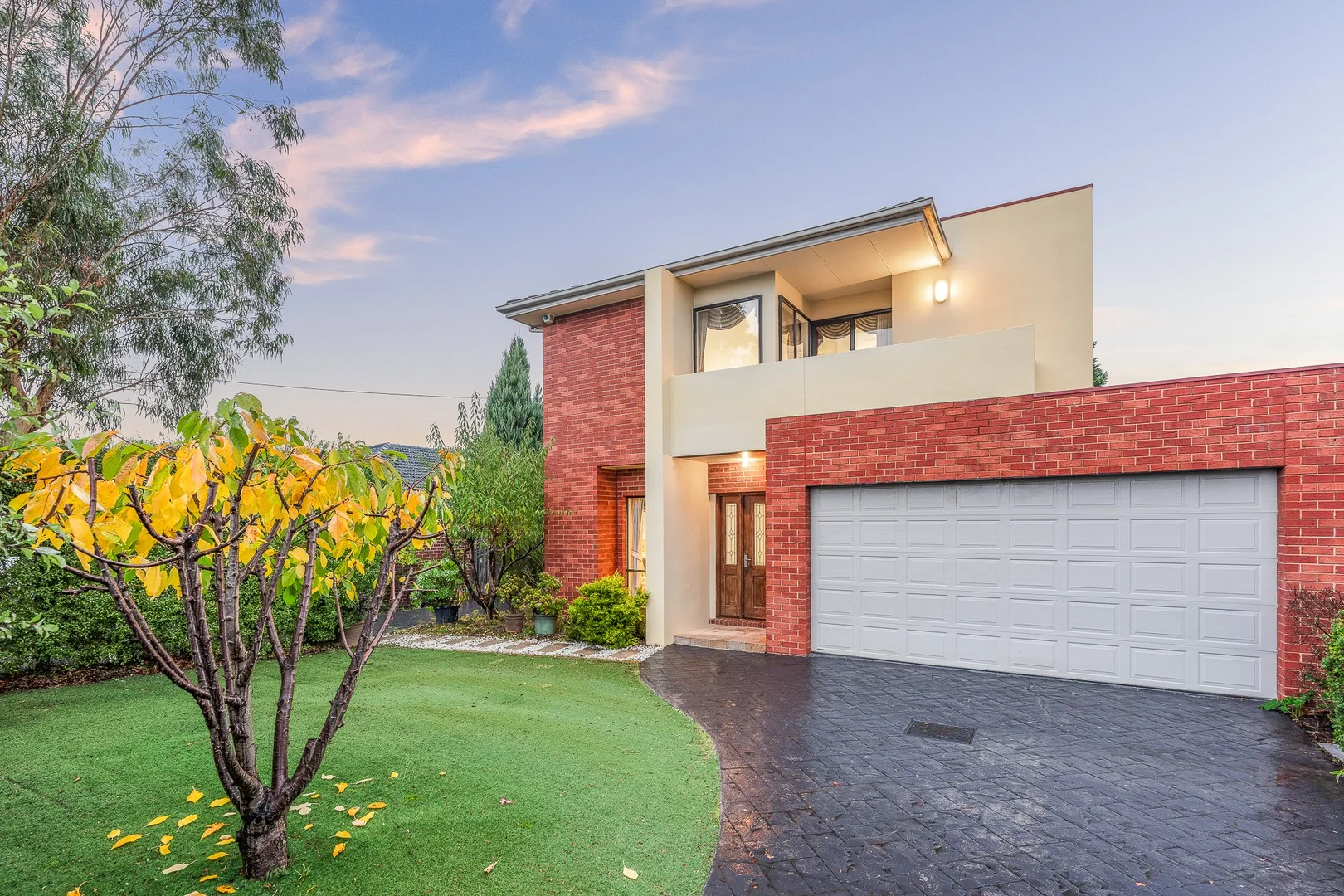
Description: Exquisitely crafted for effortless indoor-outdoor family living and entertaining, this street front residence flaunts generous proportions and premium finishes with the benefits of no body corporate in the admired East Doncaster Secondary Zone. Perfect for those chasing the ultimate lock-and-leave lifestyle, the home's quality design sits beyond a synthetic turf front yard and opens to reveal glamorous floorboards and high ceilings. Harmonising indoor and outdoor enjoyment, the home's living spaces include a sumptuous formal lounge room with gas log fire and spacious dining area that opens via sliding doors onto a paved entertaining zone where you can relax in the afternoon sunshine. A second set of sliding doors connect with the family room that's accompanied by a gourmet kitchen containing granite benches/splashbacks, Bosch oven, gas stove and dishwasher, Asko rangehood plus a breakfast bench and multi-functional laundry/butler's pantry. Accompanying the ground floor, you'll find the 4th bedroom/study and powder room, while the three upstairs bedrooms are all oversized and incorporate robes, including the north-facing master bedroom with balcony, walk-in-robe and ensuite, supplemented by a family spa bathroom and separate toilet. Perfected by a long list of quality extras, such as ducted heating, split system air conditioning, ducted vacuum, high ceilings, under stair storage, alarm, gated driveway plus a double garage with internal access. Located in a prized neighbourhood, walking distance to Donvale Primary, Tunstall Square shops, Donvale Reserve and buses, near East Doncaster Secondary, Westfield Doncaster and the Eastern Freeway.
Agent: Edison Kong - edisonkong@mcgrath.com.au - 03 8822 6188
Agent: Frank Fan - frankfan@mcgrath.com.au - 03 8822 6188
McGrath Doncaster
Edison Kong, Frank Fan
Doncaster East, VIC 3109
Property Type: House
Listing Type: Residential
Status: Active
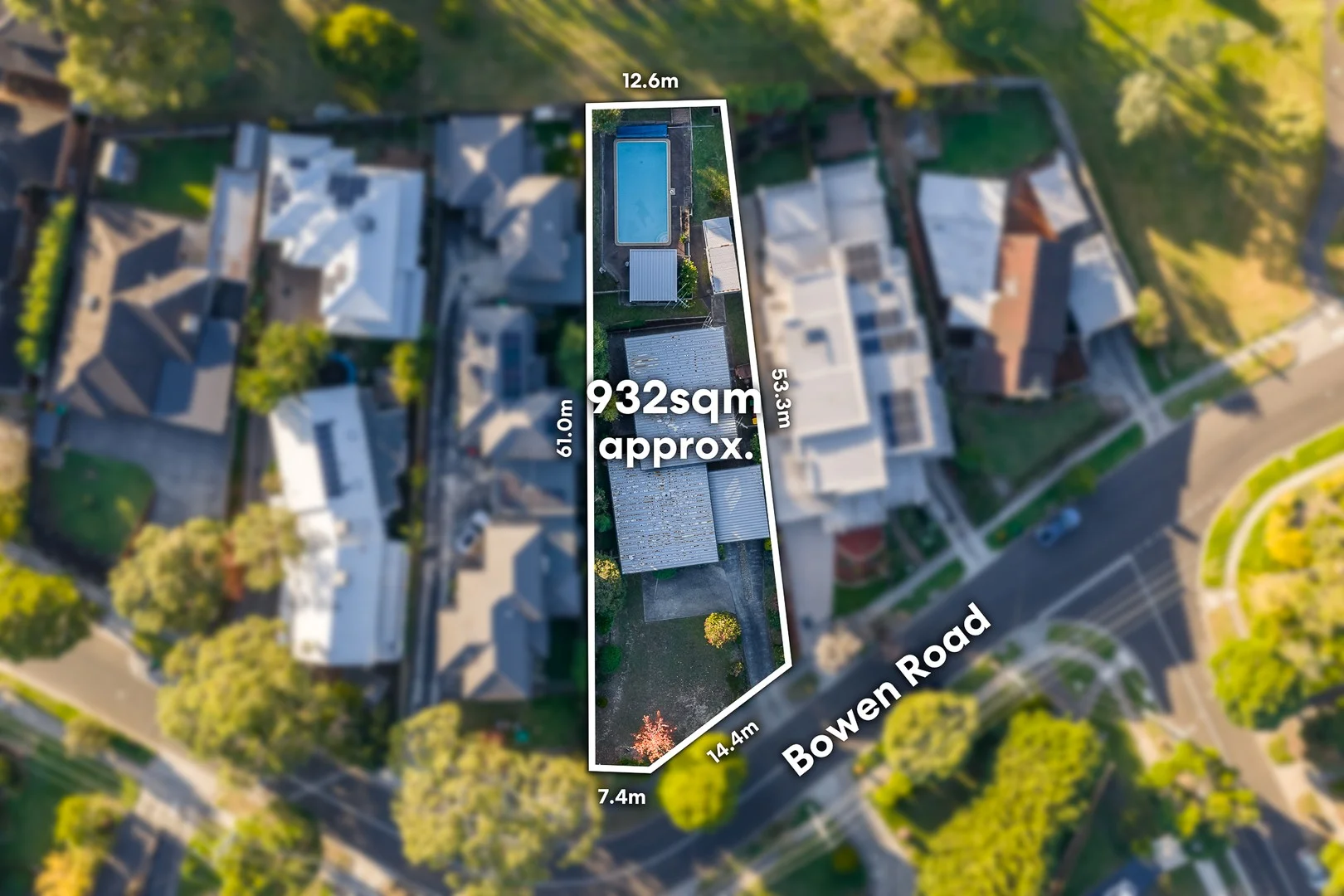
Summary: Endless Potential on a Generous 932sqm (approx.) in Prime Doncaster East
Description: A rare opportunity to secure a substantial 932sqm (approx.) allotment with a north-facing backyard and parklands behind, this original residence is positioned in one of Doncaster East's most tightly held and family-friendly pockets. Offered to the market for the first time in over 56 years, it presents exciting scope to renovate, rebuild or redevelop (STCA). Filled with retro character, the home provides a flexible single-level layout with multiple living zones, delivering comfortable accommodation while future plans are considered. A spacious formal living and dining domain is complemented by a separate meals area adjoining the kitchen, with large windows framing garden views and drawing in natural light. The accommodation includes four well-proportioned bedrooms plus a study or optional fifth bedroom, serviced by two bathrooms and a separate laundry. Beneath the existing carpets, Tasmanian Oak flooring runs throughout, offering excellent potential for renovators to restore and enhance. Outdoors, the expansive backyard creates an ideal setting for families, complete with a swimming pool, alfresco entertaining area and established surrounds. Backing directly onto parklands, the property enjoys a wonderful sense of privacy and leafy outlook, further enhancing its family appeal. Additional features include heating and cooling, ample storage and a double carport. Enjoying a convenient location close to local parks, quality schools, shopping options and public transport, this property represents a compelling opportunity for families, investors or developers seeking space, flexibility and long-term value. Renovate, rebuild or redevelop the choice is yours (STCA). Disclaimer: The information contained in this report has been provided to us and is intended as a general guide only. While every effort has been made to ensure accuracy, no responsibility is accepted and all liability is disclaimed for any errors, omissions, inaccuracies, or misstatements. This material is provided for reference purposes only and does not constitute representation by the Agent or Owner. Prospective purchasers are strongly advised to conduct their own enquiries and due diligence to verify all information prior to making any decisions.
Agent: Eric Zhang - ericzhang@mcgrath.com.au - 03 8822 6188
Agent: Mack Yu - mackyu@mcgrath.com.au
McGrath Doncaster
Eric Zhang, Mack Yu